An insider's guide to successful B2B branding
The complete five-step guide to B2B branding – in clear, jargon-free language, from initial data gathering to brand auditing and beyond.
What is B2B branding? B2B branding is the use of brands to evoke desired and positive mental associations and buying behaviour related to them. As such, B2B brands are a potent and strategic business asset, valued in the multi-millions of dollars.
Most laypeople (and, unfortunately, some marketing pros) think of branding in terms of colours, taglines, logos, packaging design and so on. They confuse branding with the tools used to help build and maintain brands.
This document is first and foremost a practical guide. In five clear steps it lays out the complete branding journey from identifying audiences to assessing brand awareness and beyond. It is based on CBC’s four-plus decades’ experience helping to build and maintain international B2B brands. You can read it here or download it as a PDF.
What’s in this guide
- What B2B branding is and why it matters more than ever
- Why invest in B2B branding?
- How is B2B branding different from B2C branding?
- Step 1: build the bedrock
- Step 2: define your brand’s DNA
- Step 3: give your brand shape and form
- Step 4: build and launch your brand
- Step 5: measure, tweak, repeat
- B2B branding in practice: four examples
- Summary and next steps
- Frequently asked questions about B2B branding
B2B branding: what it is and why it matters more than ever
Branding – the linking of positive associations and expectations to an organisation, product or service – is a proven, cost-effective way to build credibility and trust among all stakeholders: customers, suppliers, partners, employees, media, industry observers and so on. The benefits of branding are equally broad: improving market shares, safeguarding price premiums, weathering downturns and making it easier to attract and retain the right people.
And that’s under normal conditions. It’s when uncertainty mounts – such as in the current period of technological transformation and geo-political turmoil – that brands really prove their worth.
Consider for example how technology has upended long-established buying processes. Previously, these processes were characterised by enduring, in-person relationships between sales teams and buyers. Deals rested on a bedrock of trust built by personal interactions.
Fast-forward to today, and buyers use an average of ten channels along the way, splitting their time roughly equally between in-person, remote and digital interactions. One-on-one relations are being replaced by automated buying processes administered by specialist purchasers and buying groups. Buying has become impersonal, automated, efficient.
In this depersonalised environment, reputation is everything. The positive associations evoked by a strong brand are often all that differentiate a winning supplier from a mass of competitors, especially those hailing from low-cost developing nations.
Recent research values the combined brand value of the world’s 300 most valuable B2B brands at USD 4 trillion, around 11% of their enterprise value, and finds that companies with stronger branded businesses command a 65% premium in forward price-to-earnings ratios.
Why invest in B2B branding?
Strong B2B brands justify their hefty valuations by providing an enviable range of long-term advantages:
Marketing
- Greater marketing effectiveness. Customers feel they already have a positive relationship with a strong brand, and are therefore receptive to new communications and campaigns.
- Better impact from marketing investments. Branded content, ads and campaigns are more effective when they come from a known and trusted source, leading to higher engagement and conversion rates.
- More effective demand generation and lead quality. Strong branding improves the quantity and quality of inbound leads. Companies actively seek out the expertise associated with reputable brands. With weak and unknown brands it is vice versa: they spend time and money pursuing leads.
Sales
- Automatic shortlisting. Buyers focus on sellers who are well known and highly respected – who have a strong brand. Strong B2B brands also commonly have ‘brand advocates’, influencers within purchasing companies who champion them to their colleagues.
- Price premium. B2B purchasers are willing to pay for the trust and confidence they associate with strong brands. This is an invaluable competitive edge in an age characterised by near-product parity and globalised marketplaces.
- Shorter sales cycles and easier conversions. A strong brand lowers resistance during the sales process. Prospects who already recognise and trust your brand require less convincing, leading to fast closings.
- Lower cost of sales. Automatic shortlisting, snappier sales cycles and existing credibility translate into overall lower cost of sales.
Competition
- Entry barrier for competitors. Brands are like fortresses that dominate the surrounding territory. The longevity of most leading brands is proof of their ability to repel competitors.
- Less vulnerable to competitors’ marketing. A strong brand occupies space in people’s minds. Attempting to claim that space is difficult and costly.
- Stronger market differentiation. Many B2B sectors are characterised by virtually indistinguishable offerings. Branding articulates what makes your products and services unique, which helps customers remember and prefer them.
Growth
- Door opener to new markets. The positive associations of strong brands transcend national and cultural boundaries. Marketers utilise this to gain traction in new markets.
- Stronger partnerships and easier expansion. A trusted brand makes it easier to form strategic partnerships, enter new markets, and expand product lines without having to build credibility from scratch.
Resilience
- Greater customer loyalty. The loyalty and emotional attachment fostered by a strong brand helps retain customers through long, complex B2B buying cycles and business downturns. Such loyalty helps B2B brands position themselves as strategic partners rather than mere suppliers. This emotional connection helps lead to longer contracts, repeat business, and reduced churn.
- Long-term business stability. Companies with strong brands tend to be more resilient in economic downturns, as customers are less likely to cut ties with trusted partners.
- Increased customer trust and credibility. B2B decision-makers are risk averse. A strong brand reduces perceived risk and builds trust, making it easier for customers to choose you over the competition.

Organisation
- Effective recruitment and retention. Strong brands find it easier to hire – and keep – appropriately qualified and motivated employees, agents and partners. Strong brands also find it easier to enter into and maintain strategic partnerships, essential when companies want to be perceived as more than mere suppliers of products and services.
- Improved internal alignment. A strong brand provides clear direction, aligning leadership, marketing, sales and product development around a common vision and value proposition. Such alignment reduces internal friction, streamlines decision-making, and helps ensure consistent messaging across all departments.
- Easier market penetration and channel partner engagement. A well-known and respected brand makes it easier to attract, train and motivate distributors, resellers and channel partners. By working with strong brands, these stakeholders find it easier to secure sales, and to gain credibility with potential customers.
How is B2B branding different from B2C branding?
Much of the branding content online is B2C-centric. It fails to recognise that B2B involves much more than boosting product recognition and preferences. Ultimately, it’s about establishing and nurturing relationships with multiple stakeholder groups.
| B2C branding | B2B branding | |
|---|---|---|
| Who decides | One person, often alone | A buying centre: initiators, influencers, deciders, buyers and users |
| What drives the choice | Preference, emotion, habit | Risk reduction, proof and fit – with emotion playing a bigger role than most expect |
| Buying cycle | Minutes to weeks | Months to years |
| What the brand must do | Stand out and be liked | Be trusted, be easy to justify internally, and be remembered when the need arises |
| Where it lives | Mass media, retail, social | Sales conversations, specialist media, trade fairs, websites, partners and employees, social |
| What success looks like | Awareness and repeat purchase | Shortlisting, win rates, price premium and long-term relationships |
More B2B insights: B2B vs B2C rebranding: what’s the difference and why it matters
Step 1: build the bedrock

Congratulations. You’re about to launch a new brand, or overhaul an existing one. But before getting busy, you should first perform ‘stakeholder mapping’ in order to gain a clear picture of the roles and the drivers and pain points of the personas who impact your business.
A key part of such mapping involves gaining a granular understanding of customers’ buying processes. Who, for example, really calls the purchasing shots at customer X? Which arguments influence their decisions? Who do decision-makers turn to for advice? Who green lights you as a supplier, and who can stop you in your tracks?
In our experience, surprisingly many B2B suppliers have an inadequate picture of their customers’ buying centres and processes. A rigorous analysis of these processes often shows them to be more complex than previously thought. For example, a B2B buying chain typically includes the following:
- Initiators – those who start a buying process by flagging the need for a new product or service
- Influencers – individuals whose expertise and experience mean their opinions are taken seriously
- Deciders – the select few with the authority to approve a purchase
- Buyers – increasingly common among B2B buyers, these purchasing professionals handle the procurement details and negotiations
- Users – those who actually use your product or service, and whose feedback can profoundly impact the fate of your brand
Understanding customers’ pain points is only one part of the picture. You also need to understand your customers’ buying centres and buying journeys.
More B2B insights: Understanding B2B buying centres: hard work with big rewards · How stakeholder mapping drives better B2B marketing
Step 2: define your brand’s DNA

Your brand’s DNA is what makes it unique; what differentiates it from competitors. And in branding, DNA is expressed in the form of a unique brand promise – the thing or things that truly differentiate you in the market and make you relevant to target audiences.
Only when your brand’s DNA has been identified and expressed succinctly in a brand promise should you move on to answering the following:
- What is your brand narrative? This is your brand ‘story’ in a nutshell, expressed in a way that can be grasped by any audience. When done properly, a brand narrative answers all the key questions: Who are you? What do you do? Why do you do it? How? What are the benefits?
- What is your brand vision? Why are you here in the first place, what fundamental market and/or societal need(s) are you satisfying?
- What are your brand values? How do you want to be perceived: premium, economical, masculine, feminine, durable?
- What is your brand position? Where do you want to place your brand relative to competing brands? Are you sure you’re not trying to claim a position that is already taken by a competitor?
- What are your core brand messages? What arguments and proof points will you use to convince customers you can make your promises a reality?
- What is your brand personality? Brand personality refers to the human attributes assigned to a brand. For example, if your brand walked into a room, how would he/she be perceived? Are they the perceptions you want? If not, how can you change them?
Step 3: give your brand shape and form
In step two you defined your brand’s DNA. Now you have to give it a body; have to give it an appropriate yet distinctive shape and form that appeals to target audiences.
At this stage, you will most likely have to rely on the skills of professional B2B art directors and copywriters. After all, translating the rational thinking and analyses of steps one and two into eye-catching concepts and looks is no easy task. For example, if you’re launching a new brand, you need to develop at least four new components:
Brand slogan/tagline
This is a short, memorable statement in simple language of your brand’s promise. Unfortunately, too many companies opt for statements that are instantly forgettable because they are bland and general.
The best taglines are short, tightly focused and promise not only a benefit, but also resonate with customers’ business needs. FedEx’s ‘The World on Time’ tagline includes the rational promise of punctual delivery, but also conveys the greater benefit of smoother operational efficiency.
Brand symbol
The brand symbol – the logo – is your brand’s visual shorthand. It lets audiences quickly and unambiguously identify your brand. Brand symbols typically have two elements: a brand mark and a word mark. The former consists of graphic symbols, colours, etc. (for example, the vertical lines in the Cisco logo). The latter consists of a name, word or words expressed in a distinctive graphic style (the blue ‘cisco’ in the logo).
Brand appearance
Would you trust a doctor who turns up in a torn gown and scuffed shoes? But with a pipe fitter, workworn clothes might actually improve your level of trust. Appearance, it seems, really does inform how we instantly evaluate one’s professionalism and performance. The same goes for brands.
The overall appearance of your brand – photography, colours, typography, graphic design – must be carefully designed to generate the desired associations. And just as important, you need to have tools in place to ensure a consistent brand appearance across all media. At the very least, you need an easy-to-follow Corporate Visual Identity.
Brand platform
Also known as a brand communications platform, a brand platform lists and explains the core components of your brand strategy; of elements such as your brand promise, personality, etc. It should also have sections defining the brand’s tone of voice – the particular type of language and visual tonality that must be used to build the desired brand associations.
Many brand platforms also include sections defining a brand’s architecture. Is it, for example, a ‘branded house’, or one of several ‘branded houses’? A brand platform is the single, authoritative source of branding guidelines for all employees and partners.
Step 4: build and launch your brand

In our experience, the following activities make the initial building and launching of a brand as painless and efficient as possible:
Make a clear launch plan
- Develop a detailed timeline outlining tasks, responsibilities and deadlines
- Identify key milestones for pre-launch, launch day and post-launch activities
- Assign a project manager to coordinate efforts and ensure smooth execution
- Make sure your CEO and leadership team are prepared to promote the story
- Have your assets ready – double-check versions, formats, photo clearances, etc.
To win externally, anchor internally
You can’t conquer the world with your brand if you haven’t first anchored it with employees. So set aside resources to familiarise staff with key elements of the brand such as its promise, values, vision, mission, etc. Just as importantly, understand how their behaviour influences the market’s perception of your brand. At a minimum, ensure all employees have easy access to your brand platform.
Employees who believe in the brand are also its most credible advocates. A post from someone who actually does the work travels further than the same message from a company account, so make it easy for them to share.
Measure from day one
It’s never too early to start gauging the success of your branding activities. After all, the sooner you know about a glitch, the sooner you can act to fix things. Also, keep a log of all your team’s actions and their results – this can form the basis of insights to be applied during your next branding project.
Tell stories. Touch the emotions. Be remembered
Humans – and yes, that includes B2B buyers – are born to respond to and remember narratives that make deep emotional connections. And these enduring positive memories have consistently been shown to be more effective than short-term lead generation activities. The bottom line? Get creative when crafting your branding messages, and harness the universal power of storytelling.
Ensure sales and marketing are on the same wavelength
It’s one of the most persistent issues in B2B brand building: inconsistent messaging arising from tensions between marketing and sales departments. Such inconsistency not only undermines your brand-building efforts, it sows confusion among customers – a red flag when we know B2B buyers privilege brands that represent certainty and reassurance.
Prioritise thought leadership
A thought leader is an entity that markets perceive as a trusted expert with value-adding insights in a niche area. Being perceived as such is one of the most efficient ways to build a strong brand, as it helps foster organic growth in the brand’s stature and reputation. The downside is that thought leadership requires the consistent generation of high-quality, engaging content (whitepapers, technical documents, blog posts, LinkedIn posts, etc.). But the payoff makes it all worthwhile.
Do a digital health check
Today’s buyers expect B2B brands to be digitally savvy, displaying a visual and digital sophistication that matches their B2C cousins. The same buyers also expect reputable B2B brands to have an active social media presence. And of course, buyers demand smooth, hassle-free online interactions. The days of making prospects jump through hoops in order to download a whitepaper are long gone. A digital health check also entails ensuring your GEO and SEO skills are fit for purpose.
More B2B insights: From buy-in to buzz: five steps to a successful B2B rebrand launch · The emotional role in B2B branding
Step 5: measure, tweak, repeat

Brands are organic entities. When properly cared for, they thrive. When neglected or incorrectly used, they wither and fail. And while no brand is immortal, the longevity and performance of a brand can – just like other living entities – be optimised by frequent monitoring and maintenance.
Conducting regular brand audits
That’s why regular brand audits are so important. Best performed by external experts, these systematic reviews identify strengths and weaknesses in your brand management. They can, for example, detect early signs of brand erosion, a decrease in a brand’s commercial status brought about by actions such as price cuts and retailer discounts.
Regular audits can have positive results too, revealing where specific branding activities and messages have been successful. You and your team can leverage such insights to further hone your branding and branding-related activities.
Continuously assessing brand awareness
It will also be necessary to regularly assess brand awareness. Again, such assessments are best left to outside consultants, as this increases the chances of gaining insights based on objective data. Detailed assessments typically measure three levels of brand awareness – aided, unaided, top-of-mind:
- Aided brand awareness involves the use of some kind of prompt. It measures the degree to which people say they recognise a given brand when shown a list of brands in a product category.
- Unaided brand awareness refers to the degree to which people name a given brand in a particular product category without the aid of a prompt.
- Top-of-mind is the highest level of brand awareness. It measures the degree to which people name a brand first when asked to list brands in a given product category.
Beyond brand awareness
Other tools to help you assess your brand’s health include:
- Brand loyalty metrics – Loyalty is essentially an emotion, but it can still be accurately measured by using metrics such as: Net Promoter Score, Customer Engagement Score, Repeat Purchase Rate, etc.
- Social media engagement rates – Your online content (and yes, this is as true for B2B brands as for pop culture influencers) is an essential part of brand building. But for such content to be effective, it has to convince the social media algorithms that it is likely to attract and engage audiences. Low engagement rates are a sign you should revise your online content. You might, for example, attempt to boost rates by providing material known to be particularly attractive to B2B audiences: thought leadership content, case studies and industry insights.
Maintaining brand health: must-do’s
Consistent messaging is absolutely central to maintaining a brand’s health. Nothing sinks a brand’s utility quicker than contradictory communications, or divergent brand promises or brand identities. Ensuring consistency across departments, regions and markets is one of the most time-consuming parts of any brand builder’s job.
Then there’s the human factor. Employees are more than brand ambassadors who merely represent a brand – they are the brand. They embody the brand through every physical or remote interaction with prospects and customers. Ongoing brand training is often needed to help remind staff of this key fact, and how they can best embody the values and aspirations spelled out in your brand’s DNA.
B2B branding in practice: four examples
DESMI
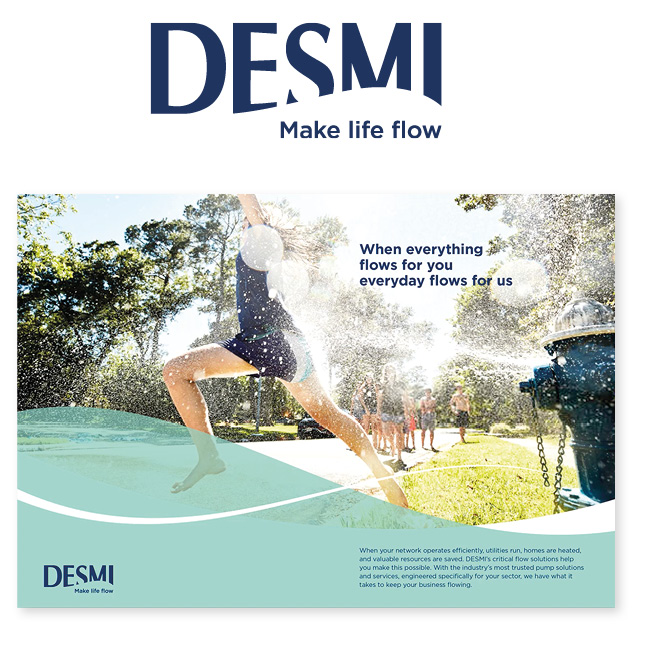
Their branding challenge. Following the adoption of a new strategy, the company decided to develop a corporate brand to reflect the new, forward-looking DESMI by moving from traditional product communication towards communication with customers and their pain points in focus.
The solution. CBC developed a brand platform that positions DESMI as an enabler for what the customer delivers to end-users. The focus was not what a DESMI product can do in terms of specs or output, but what it helps enable in real life. We took as a starting point the fact that critical flow processes are an integral part of lives around the globe. They are essential to the industries the world depends on. This line of thought led us to create the new brand tagline: Make life flow.
Nanion
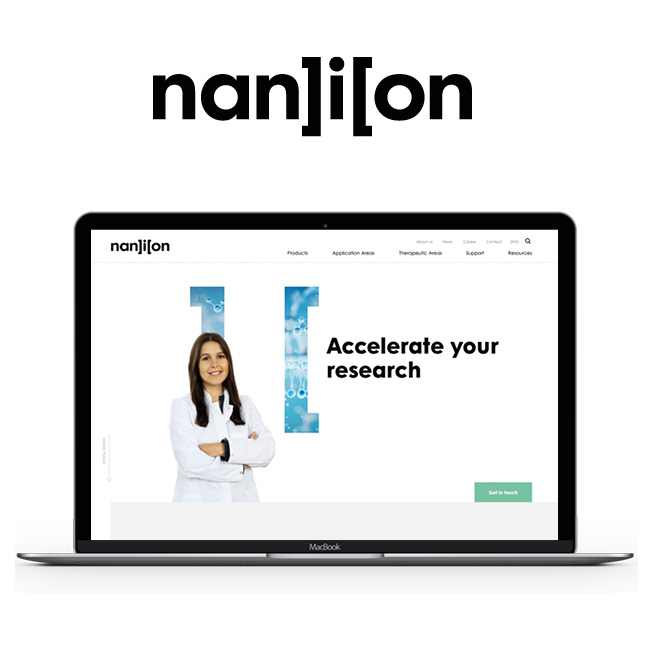
Their branding challenge. Nanion is a developer of electrophysiological analysis instruments for ion channel drug discovery and screening. Rapid business growth prompted the company to position themselves more clearly as invaluable accelerators for all the types of clients they support.
The solution. CBC developed a brand identity with a logo and corporate visual identity. We also created a distinctive tone of voice, and developed a brand communication concept crystallised in their new tagline: Accelerate your research.
Huntsman
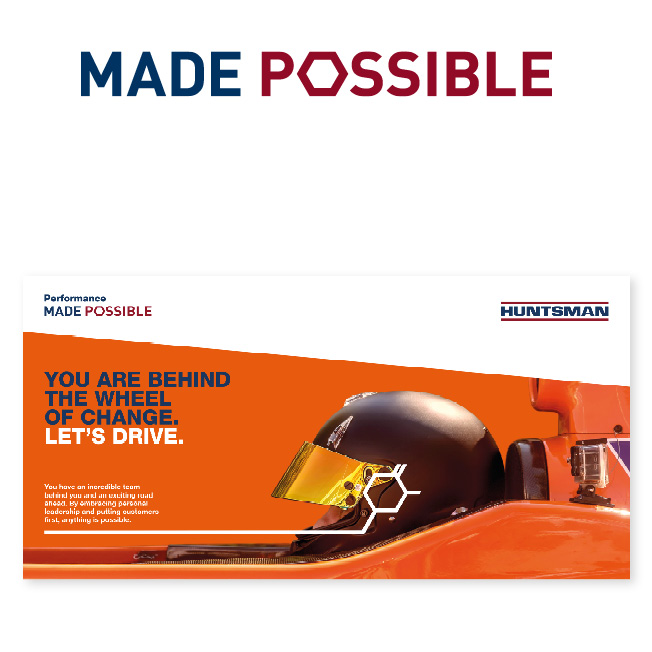
Their branding challenge. A leading provider of advanced epoxy, acrylic and polyurethane-based polymer products, Huntsman Advanced Materials wanted to re-focus its brand messaging on customers’ needs – and how Huntsman can meet them while building sustainability into every aspect of its business.
The solution. CBC developed the ‘Made Possible’ communications platform to highlight how Huntsman Advanced Materials brings life to its customers’ ideas, potential and products. The platform supported internal and external marketing materials (including brand guidelines), as well as several highly successful lead generation campaigns.
GM
Their branding challenge. A global player in the self-adhesive label converting, finishing and flexible packaging industry, GM needed a fresh brand communication platform to help realise their ambition to become the world’s leading provider of digital finishing solutions.
The solution. CBC devised the brand tagline ‘Finish First’ to underscore GM’s new position in digital finishing. Other elements of the brand overhaul included a new and elevated visual identity, and a fresh tone of voice and messaging strategy to make GM’s communications more compelling and consistent.

Summary and next steps
This B2B branding guide has covered a lot of ground. We’ve defined what is meant by B2B branding, and seen that the advantages it conveys make it more essential than ever before. More importantly, we have outlined the actions needed to build, launch and maintain a strong B2B brand:
- Step 1: build the bedrock. Learn who you really need to address with your brand – and identify their most pressing pain points.
- Step 2: define your brand’s DNA. Pin down the essence of your brand. Establish a compelling yet achievable brand promise.
- Step 3: give your brand shape and form. Put your brand’s DNA inside an appealing, distinctive body made up of brand slogan/tagline, brand symbol and brand appearance.
- Step 4: build and launch your brand. Anchor your brand with employees, then send it on its way into the market, supported by thought leadership efforts, up-to-date digital tools, aligned marketing and sales teams, and creative storytelling to forge deep emotional bonds with audiences.
- Step 5: measure, tweak, repeat. Regularly gauge your brand’s performance through brand awareness and other assessments. Then fix shortcomings before they develop into brand-busting problems.
More B2B insights: B2B rebranding: what it means and how to get it right
Frequently asked questions about B2B branding
What is the difference between a brand and a visual identity?
Your visual identity – logo, colours, typography, imagery – is the toolkit used to help build and maintain your brand. Your brand itself is the associations and expectations people attach to your name. A new logo can support a stronger brand, but it can’t create one on its own.
How long does it take to build a B2B brand?
Defining your brand DNA, promise and identity usually takes a few months, depending on how many markets, stakeholders and brands are involved. Building the brand in buyers’ minds takes longer, because trust is earned through consistent experiences over time. That is why it is never too early to start measuring.
How do you measure the value of a B2B brand?
Measure brand awareness at three levels – aided, unaided and top-of-mind – alongside loyalty metrics such as Net Promoter Score, Customer Engagement Score and Repeat Purchase Rate, and the engagement rates on your content.
What are B2B brand guidelines?
Brand guidelines are usually part of a brand platform: the single, authoritative source of branding guidelines for all employees and partners. A brand platform covers your brand promise and personality, your tone of voice, and often your brand architecture.
Why work with a B2B-specialist branding agency?
Because much branding advice is B2C-centric, and fails to recognise that B2B involves much more than boosting product recognition and preferences. A B2B specialist already understands buying centres, long sales cycles and the need to align sales and marketing.
Let’s explore your branding potential
- Curious to learn how branding can grow your business? Get inspiration from an in-depth look at some B2B branding cases from the CBC files.
- Are your branding activities really achieving your business goals? Get a free brand health-check, and let’s identify where and how we can optimise your branding.
- Need to get C-suite buy-in for your branding/rebranding project? Let us help you draft a solid decision paper.
If anything here struck a chord, I’d be glad to hear about it – a conversation costs nothing, and it’s usually where the clearest thinking starts.
Ralph Krøyer
Managing Partner, CBC
Email me · Download the guide as a PDF
About the author
Ralph Krøyer is Managing Partner at Cross-Border Communications (CBC), where he leads a senior international B2B team. He helps international B2B businesses make their value propositions clear and compelling, so they become the obvious choice – sharpening their position, standing out from competitors and turning brand and marketing into commercial growth. Explore CBC’s work with international B2B brands.
Sources
- McKinsey & Company, The surprising economics of B2B growth, May 2026
- Brand Finance, World’s most valuable B2B brands 2026, April 2026


